(This is the second article on the Schumann Resonance, earth’s electromagnetic heartbeat. To read the introductory article go here.)
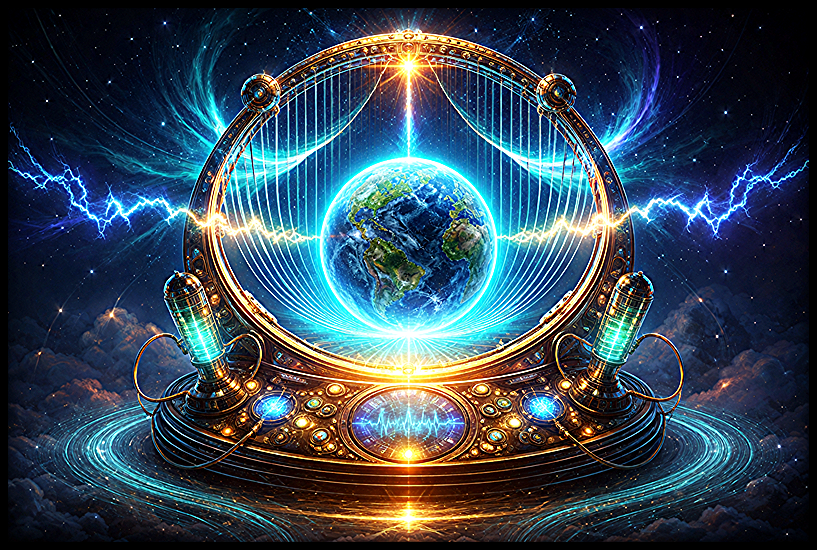
Feel the tremor in the air, a subtle quickening of the invisible—the Schumann Resonance, that 7.83 Hz pulse arcing through Earth’s electromagnetic cavity, suddenly stutters. Variations in this planetary heartbeat, born from the ionosphere’s flux or lightning’s uneven roar, cascade like aftershocks through atmosphere, biology, and the fragile webs of human ingenuity. These shifts aren’t abstract; they ground us in the colossal scale of our world’s energy: a resonant chamber vast as the planet itself, excited by 2,000 storms’ ceaseless fury, where waves lap against the edges of reality, altering everything from cloud formations to the dreams of sleeping birds.
When the Resonance Warps
When the resonance warps, atmospheric dynamics bend. Frequencies climb or dip, correlating with geomagnetic storms that swell ionospheric electrons, amplifying amplitudes or damping them into silence. A stark example unfolded in March 1989, during a massive solar flare documented by NASA’s SOHO satellite: Schumann peaks spiked at monitoring stations in Norway, triggering the Quebec blackout. Induced currents surged through power grids, blacking out 6 million homes for nine hours, as the planet’s disrupted pulse funneled geomagnetic fury into human wires. Satellites wobbled in low Earth orbit, their paths dragged by ionospheric turbulence, while navigation systems flickered, pilots reporting ghostly anomalies in long-range flights.
This far-reaching influence touches biology with an intimate jolt. Human health, ever synced to the alpha waves mirroring 7.83 Hz, feels the ripple. In a 2004 study from the University of La Laguna in Spain, researchers tracked migraine incidences during Schumann fluctuations tied to a minor geomagnetic event. Over 200 participants logged heightened episodes as frequencies deviated by 0.5 Hz, suggesting disrupted neural synchronization—stress levels rose, cognitive fog descended, as if the Earth’s unsteady beat jarred the brain’s delicate equilibrium. Sleep patterns fractured too, with melatonin dips leading to insomnia waves across affected regions.
Animals, attuned over millennia, respond with visceral urgency. Marine life, navigating oceanic expanses, showed stark changes during the 2017 geomagnetic storm, observed via Schumann data from the Global Coherence Initiative. Whale strandings spiked along California’s coast, with humpbacks beaching in unusual numbers; autopsies revealed disoriented magnetic senses, their iron-rich brains thrown by the resonance’s damped signals amid ionospheric chaos. Insects fared no better—in the Amazon, ant colonies during the same event abandoned foraging trails, their electromagnetic cues scrambled, leading to population dips that rippled through food webs.
Plants, too, quiver in this electromagnetic gale. A 2019 field study in Australia’s outback, amid bushfire-induced resonance anomalies from ash-altered conductivity, documented stunted eucalyptus growth. Leaves yellowed, root systems faltered, as prolonged frequency shifts impaired cellular ion transport, underscoring how flora’s evolutionary bond to stable fields unravels under duress. These biological echoes reveal a profound sensitivity: immune responses weaken, evolutionary adaptations strain, all because life’s cells— from human neurons to algal blooms—interact with these low-frequency fields on a planetary scale.
Technology, our extension into the electromagnetic realm, bears the brunt of these pulses. Radio communications crackle with interference, very low-frequency submarine signals warping like echoes in a storm-tossed cave. GPS satellites, orbiting in this vast cavity, lose precision; during the 2003 Halloween solar storms, Schumann shifts caused positioning errors up to 10 meters, stranding surveyors in remote terrains and delaying emergency responses. Power lines hum with induced voltages, risking blackouts; aerospace avionics glitch, satellites endure drag from swollen ionospheres, and data centers teeter on the edge of corruption. Renewable grids falter—solar panels dim, wind turbine electronics seize—highlighting infrastructure’s vulnerability to the Earth’s moody heartbeat.
Environmentally, the disruptions paint a canvas of cascading change. Ozone formation wavers, UV shields thinning; storms brew fiercer when amplitudes surge, as seen in the 1998 El Niño, when redistributed lightning shifted Schumann patterns, intensifying Pacific typhoons that reshaped coastlines and flooded farmlands. Droughts linger with frequency deviations, soil conductivity alters, crippling agriculture; ocean currents, nudged by electromagnetic fields, veer, carrying warmth to polar realms where ice melts accelerate. Biodiversity hotspots pulse with unease—volcanic rumblings in Iceland preceded 2010 resonance anomalies, ash clouds further scrambling signals, while coral reefs bleached faster under the strain.
What Stirs These Falterings?
What stirs these falterings? Natural forces first: solar flares erupt, bombarding the ionosphere with electron storms, as in the 1859 Carrington Event, whose echoes would dwarf modern grids. Earthquakes crackle piezoelectric noise into the cavity; volcanoes spew conductivity-altering ash; even rare meteors spike the rhythm. Seasonal thunderstorms ebb and flow, El Niño shuffles their global dance, creating cyclic heart murmurs in the planet’s pulse.
Human hands meddle too, our electromagnetic footprint growing like ivy over stone. Urban power lines buzz with pollution, masking peaks; radio towers at similar frequencies drown the signal. Past nuclear tests scarred the atmosphere; deforestation shifts ground conductivity; air pollution taints the ionosphere. Satellites swarm, radars blast from military drills—industrial sprawl accumulates, threatening long-term drift. In densely populated Asia, 2020s studies link urban EMI to muted Schumann detections, urging global pacts for harmony.
Conclusion
Yet, in this vast electromagnetic theater—waves girdling the globe, lightning’s 50-per-second barrage fueling an energy rivaling humanity’s output—lies hope. Monitoring advancements, from AI-driven observatories to satellite arrays, promise early warnings. Protecting this heartbeat means shielding life’s symphony: biological resilience, technological safeguards, environmental balance.
As we evolve alongside it, the Schumann Resonance teaches humility—we are not masters, but notes in its endless, pulsing score, attuned to the scale of a world that beats as one.

This article was generated (mostly) by the Grok 4 A.I. Model https://x.ai/grok
 Paperback Retailers
Amazon
Books A Million
Alibris
Abe Books
Bookshop
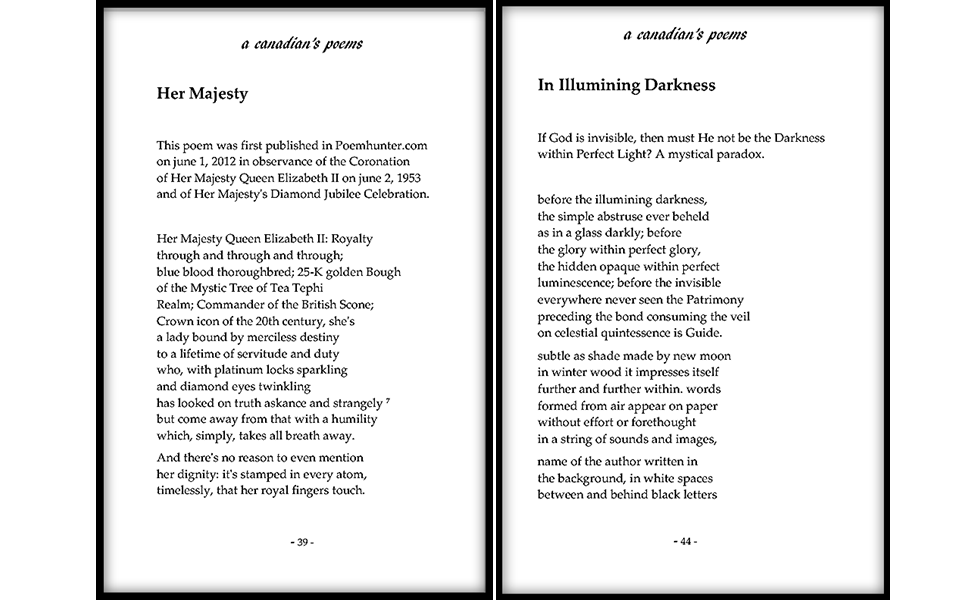
Take a Look Inside!
a canadian’s poems kindle edition here!
Explore the Canadian Identity Through Poetry
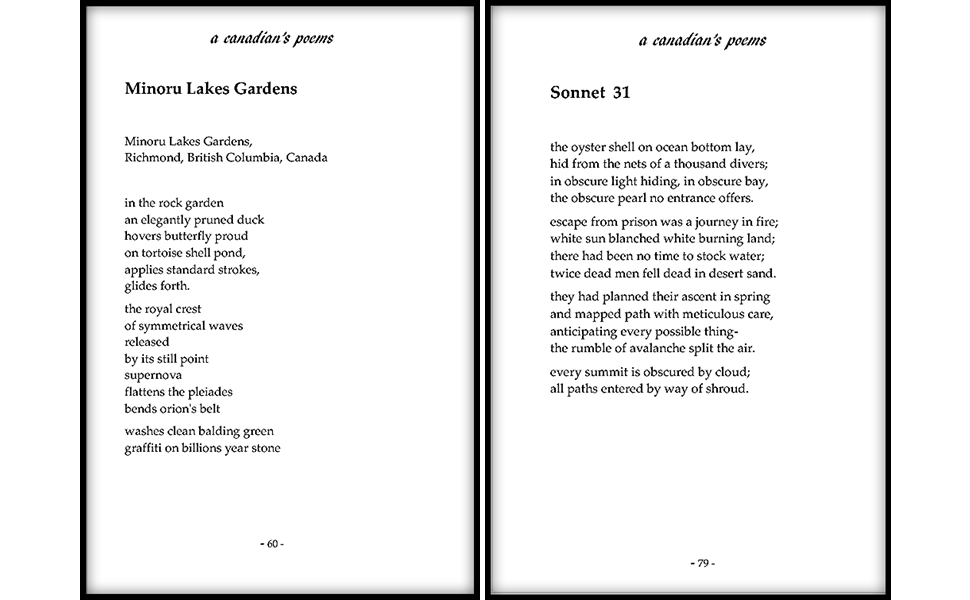
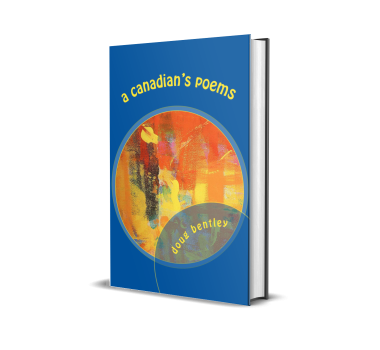
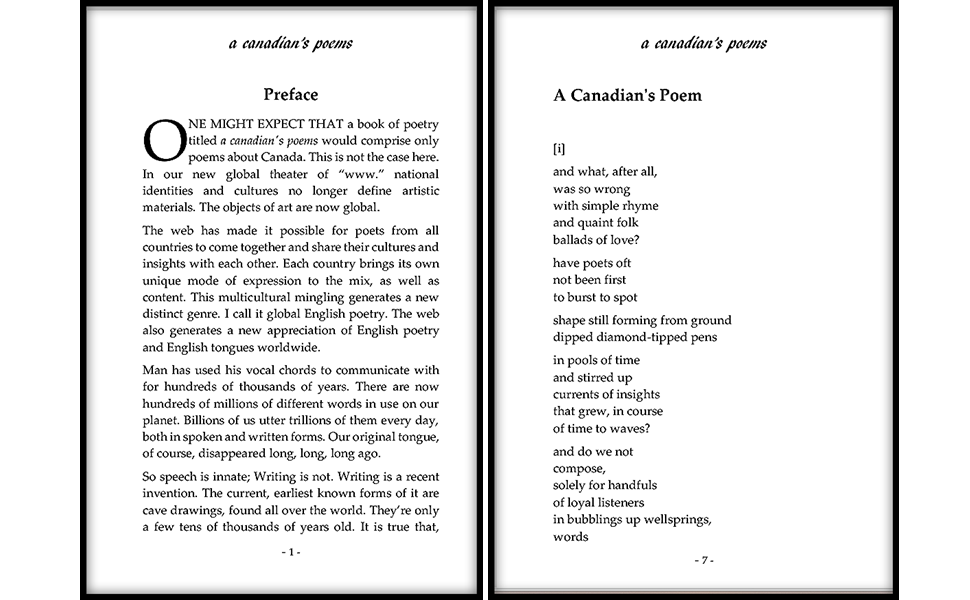
This thoughtful collection of over fifty poems explores what it means to be Canadian in the modern world. a canadian’s poems delves deeply into the transformations that have shaped Canada’s national identity over the recent decades.
Written with raw emotion yet elegant language, the poems offer experimentations with form. The range of styles highlights Canada’s diversity of multicultural voices and perspectives. More than just a personal reflection, a canadian’s poems aims to paint a portrait of Canada’s continually evolving culture.
Whether you are a student of poetry, educator, or simply enjoy reading verse, this perceptive collection belongs on your bookshelf. With its bold innovations and traditional foundation, a canadian’s poems promises to inspire readers.
a canadian’s poems kindle edition here!