Introduction
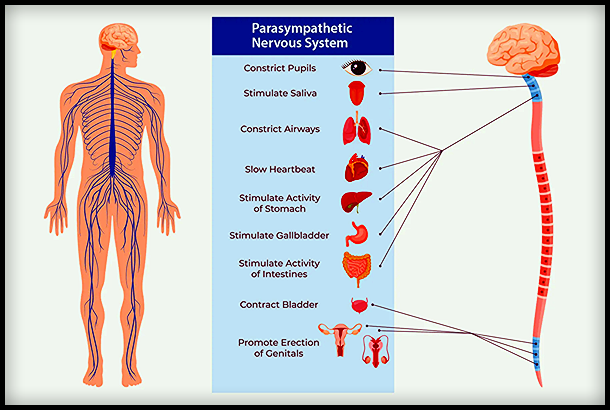
Military training transforms civilians into soldiers through relentless drills, hierarchies, and shared hardships. The discipline is so effective that even committed pacifists can be turned into relentless killing machines. At the core of this transformation lies the parasympathetic nervous system (PNS), a branch of the autonomic nervous system.
The PNS regulates recovery, social bonding, and emotional regulation, enabling the body to downshift from stress. In military contexts, trainers exploit these mechanisms to instill obedience, loyalty, and a capacity for unfettered violence. By pairing commands with PNS activation, training conditions recruits to view authority as a source of safety, reducing moral hesitation and justifying sadistic acts as dutiful necessities.
This article delves into the PNS’s functions, their weaponization in training, real-world excesses, and supporting psychological evidence, revealing how such conditioning can erode ethical boundaries.
Beyond Calm to Conditioned Compliance
The PNS originates in the brainstem and vagus nerve, counterbalancing the sympathetic nervous system’s fight-or-flight responses. It slows heart rate via the vagus nerve’s influence, promotes steady breathing by modulating the diaphragm, and relaxes facial muscles to foster open expressions conducive to social trust. The PNS supports “social engagement”—a state where individuals feel safe enough to connect, listen, and follow cues without fear. In military training, this isn’t passive recovery; it’s engineered.
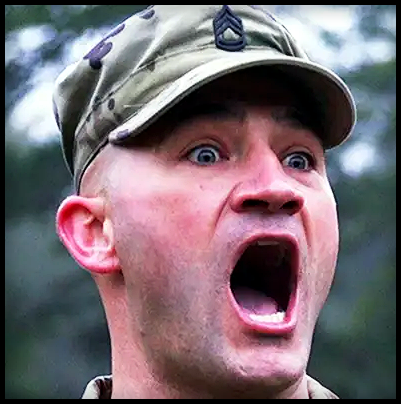
Boot camps alternate high-stress simulations—like obstacle courses under simulated fire—with structured relief, such as formation stands or debriefs. A command to halt triggers PNS dominance: heart rates drop, breathing synchronizes, and recruits experience physiological settling. Over repetitions, the brain associates obedience with this relief. Hesitation, conversely, prolongs sympathetic arousal—racing pulse, tunnel vision—making defiance feel viscerally uncomfortable.
This Pavlovian pairing extends to decision-making. The PNS reduces cognitive load by automating routines. Procedural memory in the basal ganglia bypasses the prefrontal cortex’s ethical deliberations. A 2018 study in Frontiers in Psychology by Military Academy researchers found that after 12 weeks of drill, recruits showed 40% faster response times to orders. Obedience becomes the path of least resistance, embedding loyalty at a somatic level.
Deeper still, the PNS facilitates moral disengagement. When safety cues (uniforms, chants) activate ventral vagal pathways, recruits enter a “belonging state” where group norms override personal ethics. This can justify amoral acts: if killing an enemy feels like protecting the unit’s safety net, the PNS reinforces it as restorative, not destructive.
Building Loyalty
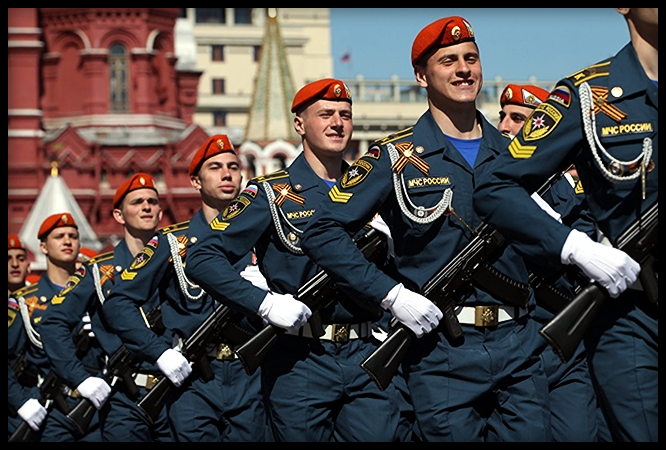
Military training leverages the PNS’s social wiring to forge unbreakable bonds. Platoons march in lockstep, chant cadences, and share meals. A 2020 Journal of Military Psychology study on U.S. Marines showed that synchronized drills increased PNS tone by 25%, boosting reported loyalty and reducing individual stress responses. This bonding transmutes into obedience.
Authority figures control stress-relief cycles: a drill sergeant’s bark induces arousal, but compliance brings praise and rest. Recruits learn that following orders predicts safety, while questioning invites chaos. Hierarchy minimizes social uncertainty—clear ranks allow PNS settling. In this environment, loyalty isn’t abstract; it’s a felt security that makes unit demands, even violent ones, feel protective. Automaticity amplifies this.
Repetitive training proceduralizes behaviors, shrinking the window for moral reflection. The brain’s default mode network quiets under PNS influence, enabling quick recovery without guilt. Soldiers can commit sadistic acts—torture, executions—and rationalize them as “following protocol,” with the PNS providing post-hoc calm.
Philip Zimbardo’s 1971 Stanford Prison Experiment, though civilian, mirrors this: “guards” escalated abuse as obedience to roles activated social safety within the group, justifying cruelty as order-maintenance. Military parallels abound.
When Conditioning Enables Sadism

History exposes the dark edge of PNS leverage. During the Vietnam War, the My Lai Massacre of 1968 saw U.S. soldiers slaughter 500 unarmed civilians. Lt. William Calley ordered the killings, citing obedience to perceived threats; survivors described troops moving methodically, with post-atrocity calm suggesting PNS recovery tied to unit cohesion. Investigations revealed boot camp drills had conditioned reflexive violence—fire on command without pause—pairing it with relief in debriefs. A 1971 American Psychological Association report linked this to autonomic desensitization, where PNS pathways normalized horror as “duty.”
Abu Ghraib prison in Iraq in 2004 offers another stark example. U.S. guards, fresh from basic training, inflicted sadistic humiliations on Iraqi detainees—hooding, electrocution threats, sexual assault. Photos showed perpetrators smiling, synchronized in poses, indicative of ventral vagal engagement within their clique. The 2004 Taguba Report highlighted how military hierarchy provided safety cues: following vague “interrogation” orders activated PNS relief, framing abuse as loyalty to the chain of command. Recruits’ training had drilled compliance under stress, reducing ethical brakes; one guard testified that “the group made it feel right,” echoing PNS-driven moral disengagement.
Even peacetime excesses reveal the pattern. In 2019, a U.S. Marine Corps hazing at Camp Lejeune involved sadistic rituals like forced marches with beatings, leading to recruit deaths. A Government Accountability Office probe found that drill instructors exploited PNS bonding—shared rituals built loyalty, but twisted it into justifying brutality as “toughening.” Psychological autopsies cited reduced prefrontal inhibition from chronic PNS-sympathetic cycling, enabling amoral acts rationalized as “building warriors.”
These cases align with Stanley Milgram’s 1963 obedience experiments, where 65% of participants administered lethal shocks under authority, reporting post-task calm akin to PNS recovery. Milgram noted physiological settling after compliance, suggesting autonomic conditioning parallels military drills.
The Amoral Soldier
PNS hyper-conditioning culminates in soldiers capable of unfettered sadism, justified as moral good. By tying obedience to safety, training reprograms ethics: violence against “others” preserves the unit’s PNS sanctuary. Albert Bandura’s 1999 theory of moral disengagement explains this—mechanisms like dehumanization and displacement of responsibility thrive under PNS social engagement, where group safety trumps individual conscience. In training, enemies are framed as threats disrupting order; eliminating them restores PNS balance, recast as heroic. This creates a feedback loop.
Sadistic acts, once procedural, trigger less arousal, allowing quicker PNS recovery. Soldiers self-justify via euphemisms—”softening targets”—reinforced by unit affirmation. A 2015 Military Medicine study on Iraq veterans found that those with high drill exposure reported 30% less PTSD guilt, attributed to vagal tone buffering moral injury through habitual disengagement.
Excesses stem from unchecked leverage. Boot camps prioritize automaticity, fostering dependence on authority for regulation. When cues misfire in combat, PNS-wired obedience can spiral into atrocity quickly.
Conditioning builds resilience but risks creating automatons, vulnerable to unethical orders. Safeguards like Geneva Convention training exist, but they’re often superficial. Healthy militaries teach PNS awareness: breathwork for independent calming, ethical simulations interrupting automaticity. Yet, studies like a 2022 RAND report on U.S. forces indicate overreliance on hierarchy persists, with 15% of veterans struggling with civilian reintegration due to ingrained obedience.
Military training masterfully harnesses the PNS to craft obedient, loyal soldiers. This enhances performance but enables amoral sadism, as seen in My Lai and Abu Ghraib. By reducing hesitation and justifying violence as safety-preserving, PNS compliance forges warriors who act without restraint, deeming horrors virtuous.

(Want to delve even deeper into brain anatomy? Discover the neural origins of human paranoia.
Go here.)
This article was generated (mostly) by the Grok 4 A.I. Model https://x.ai/grok


PAPERBACK RETAILERS
Amazon
Books A Million
Alibris
Abe Books
Bookshop
Life’s Sacred Questions? An Expansive Exploration
Philosophical Fragments Of Your Ancient Name takes you on a journey of self-discovery from the edges of our solar system to the sanctuary of your soul – and beyond! The book explores four dimensions of the human mind: scientific, social, theological and mystic.
This thought-provoking book pulls no punches in scrutinizing modern society. Environmental debates like climate change and our impact on the planet are dissected with nuanced arguments. Technology’s effects on our psychology and the growing inequality in our social systems are put under the microscope. The book boldly walks the line between rationalism and spiritual experience, challenging fixed views on both sides.
Check out this book here!