
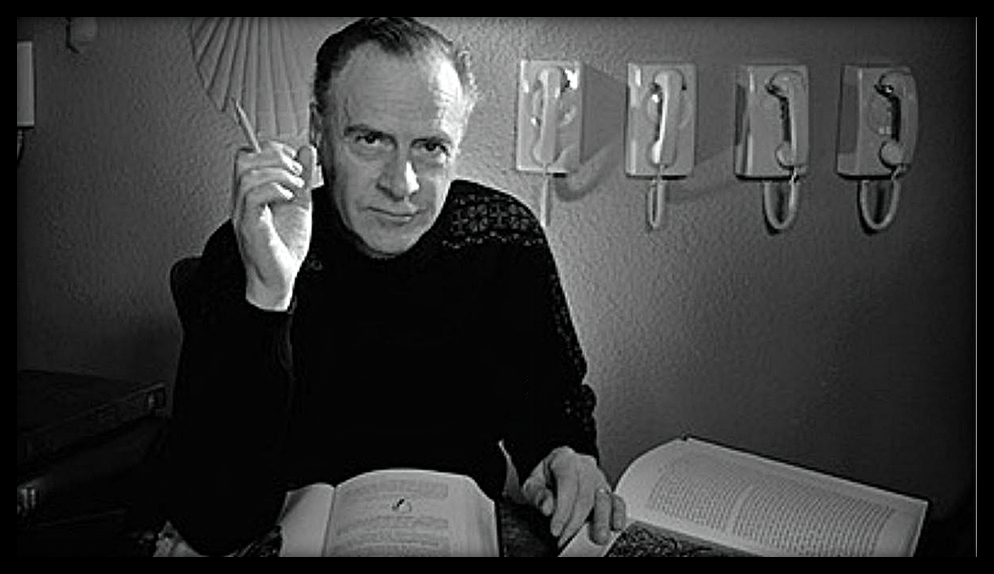
Marshall McLuhan’s concept of “narcissus narcosis” is one of the most intriguing and cautionary ideas in his media theory. Drawing from the Greek myth of Narcissus—a beautiful youth who falls in love with his own reflection in a pool of water, mistaking it for another being—McLuhan uses this metaphor to describe a psychological and perceptual state induced by media technologies.
In the myth, Narcissus becomes entranced – mesmerized – leading to his demise through self-absorption and inaction. McLuhan adapts this to argue that humans, when confronted with new media as extensions of themselves, enter a state of “narcosis” or numbness. Just as Narcissus failed to realize that the face in the water that mesmerized him was his own, we fail to recognize these technologies as parts of our own bodies and senses, Instead, our extensions hypnotize us, which results in a form of auto-amputation or sensory shutdown to cope with the overload. This narcosis isn’t mere distraction; it’s a defensive mechanism. When these extensions become too intense or pervasive, the human psyche numbs itself to avoid irritation or overload, much like how the body might go into shock after an injury.
The “narcissus” aspect highlights the self-hypnotic fascination: we adore and integrate with the medium without realizing it’s a mirror of ourselves. In essence, the medium lulls us into complacency, masking its profound effects on our perceptions and behaviors.
In automated environments—spaces dominated by robotics, AI-driven systems, and algorithmic processes—this concept takes on a heightened relevance. Automation isn’t just about efficiency; it’s a medium that extends human capabilities while inducing a narcotic numbness. Here, narcissus narcosis manifests as a sensory and cognitive detachment, where individuals become extensions of the machines, losing awareness of how these technologies reshape their humanity.
The Automation Automaton: Sensory Numbness and the Loss of Embodied Experience
In automated settings, narcissus narcosis often appears as a dulling of the senses, where humans adapt to machine-mediated interactions by shutting down direct sensory engagement. Automation amplifies this: consider modern factories equipped with robotic arms, like those in automotive assembly lines from companies such as Tesla or Fanuc.
Workers once relied on tactile feedback—the feel of metal, the resistance of tools, the rhythm of manual labor—to perform tasks. Now, they oversee robots via digital interfaces, monitoring screens and dashboards. This extension of human action through machines creates a hypnotic state: the worker becomes mesmerized by the robot’s precision, failing to notice how their own sensory acuity atrophies.
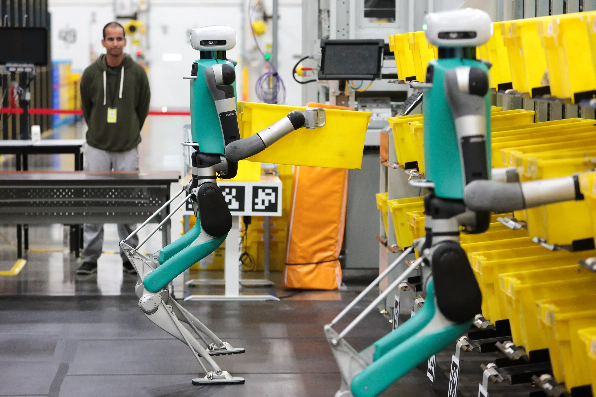
The narcosis here is narcotic because it numbs the irritation of displacement. Without realizing it, humans auto-amputate their haptic senses, adapting to a world where touch is outsourced. A real-world example is Amazon’s automated warehouses, where pickers use handheld scanners and follow algorithmic directives. The medium (automation) extends efficiency but induces a trance-like focus on data streams, reducing workers to nodes in a system. They stare at reflections of their labor—digital metrics of productivity—much like Narcissus gazing at his image, unaware that this “other” is an extension of themselves. Over time, this leads to perceptual imbalances: studies from organizations like the Occupational Safety and Health Administration (OSHA) note increased reports of dissociation and fatigue in automated environments, symptoms of this narcosis.
Identity and the Hypnotic Merger with Machines
Automation also fosters narcissus narcosis in terms of identity, where individuals become entranced by their machine-augmented selves, blurring the line between human and tool. McLuhan warned that we serve our extensions rather than vice versa, and in robotic contexts, this creates a self-hypnotic identity crisis.
Take humanoid robots like Boston Dynamics’ Atlas or SoftBank’s Pepper, deployed in service industries or elder care. These robots mirror human forms and behaviors, extending our social presence. Users, especially in isolated settings, form emotional bonds, treating robots as companions. This fascination is narcotic: the user falls in love with the “reflection” of humanity in the machine, numbing awareness of their own loneliness or dependency.
In professional spheres, this manifests in the gig economy, where platforms like Uber use automated algorithms to assign rides. Drivers become extensions of the app, their identities reshaped by ratings and GPS directives. The narcosis sets in as they adapt by numbing resistance—ignoring the stress of constant surveillance—to maintain the hypnotic flow of work. McLuhan might say this is a form of auto-amputation of autonomy: the medium messages subservience, and the driver, entranced, doesn’t recognize the app as an extension of their decision-making. Psychological research, such as studies from the Journal of Occupational Health Psychology, highlights “technostress” in these environments, where workers experience depersonalization—a clear sign of narcosis.
On a broader scale, automated environments induce narcissus narcosis through perceptual overload, retraining how we see the world while numbing us to the changes. Smart cities, with their robotic surveillance drones and AI traffic systems (e.g., those in Singapore or Barcelona), extend collective senses across urban landscapes. Citizens are bombarded with data—real-time feeds, predictive analytics—creating a “global village” of constant connectivity. Yet, this extension overwhelms, leading to narcosis: we numb ourselves to privacy erosions, becoming hypnotized by the convenience of automated living.
Socially, this translates to altered interactions. In automated customer service, chatbots like those powered by IBM WatsonX handle inquiries, extending human communication. Users engage in scripted dialogues, fascinated by the “intelligent” responses, but numb to the loss of genuine empathy. The narcosis hides the medium’s message: relationships become algorithmic, fragmenting social bonds. McLuhan noted that narcosis prevents us from seeing the full impact until it’s too late, much like how social media users adapt to echo chambers without questioning the perceptual shifts.
This article was generated (mostly) by the Grok 4 A.I. Model https://x.ai/grok
Mystic Antarctica is available only at the Amazon Kindle Store.
Mystic Antarctica at Amazon USA here!
An Incredible Book of Maps of Antarctica!
Are you fascinated by the mysterious, remote, and awe-inspiring continent of Antarctica? This vast region, which holds a special place in our imaginations, is now available to explore like never before. Sourced from the new Raised Elevation Model of Antarctica (REMA), Mystic Antarctica brings you 75 of the highest resolution topographic maps of Antarctica ever created.
Whether you’re a scientist, explorer, student or simply fascinated with one of the last truly wild places on the planet, this unique collection of maps provides a glimpse into the untamed, untouched world beneath the Antarctic ice as it has never been seen before.


