
In the ever-accelerating world of technology, few developments spark as much fascination and debate as artificial intelligence (AI). At its pinnacle lies Artificial General Intelligence (AGI)—a hypothetical form of AI that could understand, learn, and apply knowledge across any intellectual task at or beyond human levels.
This isn’t science fiction; it’s the explicit goal of leading organizations like MicroSoft OpenAI and Google DeepMind. As AI reshapes our world—from diagnosing diseases to optimizing energy grids—the stakes couldn’t be higher.
Unpacking Artificial General Intelligence: Research and Debates
AGI represents a quantum leap from today’s narrow AI systems. Research on AGI, however, is fraught with uncertainty. Proponents argue that scaling up current architectures—feeding them vast datasets and computational power—could bridge the gap to general intelligence. A 2023 survey by the AI research firm Anthropic found that 58% of machine learning researchers believe AGI could arrive by 2040, driven by advancements in large language models (LLMs) like those behind ChatGPT. These models, trained on internet-scale data, demonstrate emergent abilities: they can write poetry, solve math problems, and even code, suggesting a path toward broader cognition.
Skeptics, including cognitive scientists like Gary Marcus, counter that these systems lack true understanding. In his 2022 book Rebooting AI, Marcus argues that LLMs are “stochastic parrots,” mimicking patterns without grasping meaning.
A pivotal event underscoring this debate was the 2022 release of OpenAI’s GPT-3, which generated human-like text but also produced factual errors and biases, highlighting the limitations of pattern matching. The infamous “hallucinations” of models like GPT-4—where they confidently invent facts—further fuel concerns that AGI might require entirely new paradigms, perhaps integrating symbolic reasoning with neural networks. So the trajectory toward AGI isn’t linear.
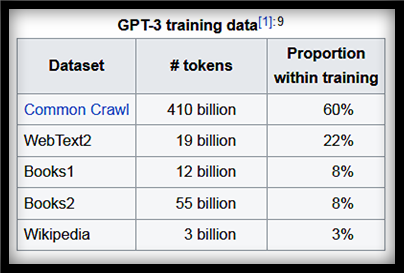
The “scaling hypothesis,” popularized by OpenAI, posits that more data and computational power will yield intelligence. A landmark event was the 2020 release of GPT-3, a 175-billion-parameter model that powered applications from automated writing to virtual assistants. This culminated in the November 2022 launch of ChatGPT, which amassed over 100 million users in two months, democratizing AI access and sparking a global conversation on its implications.
Yet, a 2023 paper in Nature by researchers at Stanford University warned of diminishing returns: as models grow, they demand exponentially more energy, raising environmental costs.
The Vanguard: OpenAI and DeepMind’s Journeys
OpenAI’s progress hasn’t been without controversy. In March 2023, CEO Sam Altman released GPT-4. This model, capable of multimodal inputs (text and images), aced standardized tests like the SAT and bar exam, inching closer to AGI. Yet, internal turmoil surfaced in November 2023 when the board briefly ousted Altman over safety concerns, only to reinstate him amid employee backlash—a saga highlighting tensions between rapid innovation and ethical oversight.
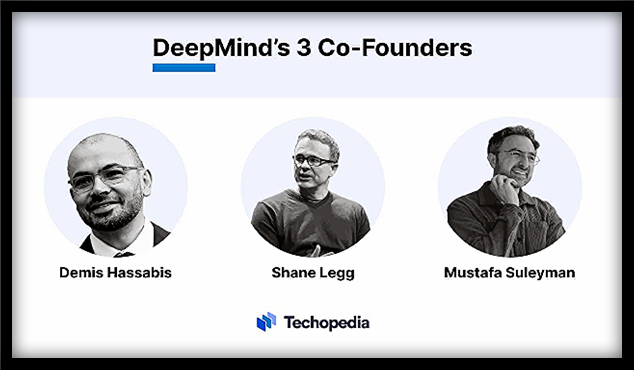
DeepMind, acquired by Google in 2014 for $500 million, takes a more research-oriented approach. Founded in 2010 by Demis Hassabis, Mustafa Suleyman, and Shane Legg, it focuses on “solving intelligence to solve everything else.” In 2020 DeepMind’s AI solved a 50-year biology grand challenge, predicting structures for nearly all known proteins by 2022, accelerating drug discovery. In 2023, DeepMind’s Gemini model rivaled GPT-4 in versatility, integrating vision and language.

OpenAI’s consumer-facing tools have popularized AI, while DeepMind’s breakthroughs advance science. Their rivalry—evident in patent filings and talent poaching—drives progress, but as a 2023 MIT study noted, it also concentrates power in Big Tech, potentially stifling diversity in AGI research.
(Want to dive deeper into the new world of AI Chatbots?
Check out this article.)
This article was generated (mostly) by the Grok 4 A.I. Model https://x.ai/grok
New Edition!
Mystical Poems of love, life, death, hope and victory!
“GRAIN by Doug Bentley is an erudite, insightful, and provocative poetic journey through the mystical regions of the human psyche. From first word to last, this thought-provoking volume of sonnets and free verse begs to be pondered – to be mulled over and savored like a fine wine.”
– Rich Follett for Readers’ Favorite
Check out this book here!