The past century has witnessed an extraordinary transformation in astronomical telescopes, evolving from massive ground-based behemoths limited by Earth’s atmosphere to sophisticated space-faring instruments that peer into the universe’s deepest secrets. This journey, spanning from the aftermath of World War I to the present day, reflects humanity’s relentless quest to understand the cosmos.
Telescopes have grown in size, precision, and capability, with advancements in penetration (the ability to detect faint or obscured objects), resolution (clarity of images), location (from mountaintops to orbit), and optical properties (such as mirror design and wavelength sensitivity). We’ll trace this evolution, starting with the largest telescopes of the post-World War I era and culminating in the revolutionary James Webb Space Telescope (JWST).
Post-World War I: The Dawn of Giant Reflectors
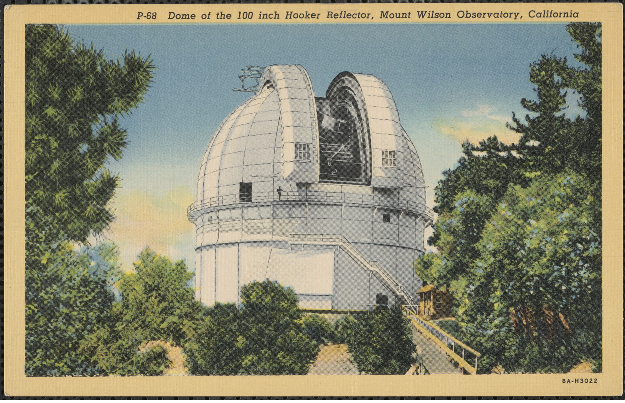
(The 100-inch Hooker Telescope was the world’s largest telescope from 1917 to 1948.)
In the years following World War I, astronomy was dominated by large reflecting telescopes, which used curved mirrors to gather and focus light, offering superior light-collecting power over earlier refracting designs that relied on lenses. The Hooker Telescope at Mount Wilson Observatory in California, completed in 1917, marked a pinnacle of this era. With a 100-inch (2.5-meter) primary mirror, it was the world’s largest telescope until 1948. Its location on a high-altitude mountain (1,742 meters) minimized atmospheric interference, providing clearer skies than lowland sites.
The Hooker’s optical properties emphasized visible light, with a resolution limited by its aperture size and atmospheric turbulence. Penetration was modest; it could observe distant galaxies but struggled with dust-obscured regions. Notably, Edwin Hubble used it in the 1920s to discover the universe’s expansion, measuring redshifts in galaxies. However, its ground-based location meant “seeing” (image sharpness) was hampered by air currents, and it couldn’t access ultraviolet or infrared wavelengths blocked by the atmosphere.
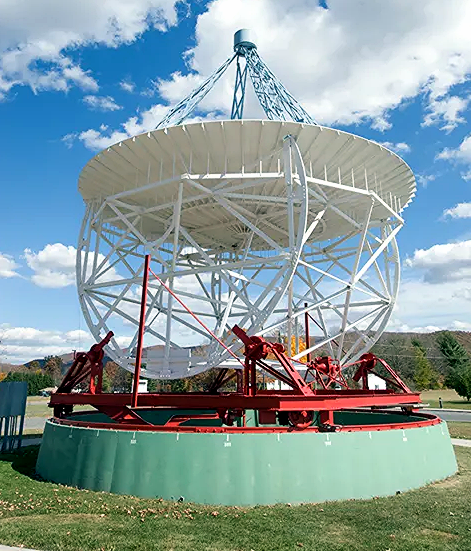
This period’s telescopes were engineering marvels, but their limitations—primarily atmospheric distortion and light pollution—spurred innovation. By the 1930s, radio astronomy emerged as a complement, with Karl Jansky’s accidental discovery of cosmic radio waves in 1932. Early radio telescopes, like Grote Reber’s 9-meter parabolic dish in 1937, penetrated interstellar dust that blocked optical light, detecting radio emissions from the Milky Way. Their resolution was poor, but they opened new windows into non-visible spectra.
Mid-20th Century: Scaling Up and Diversifying
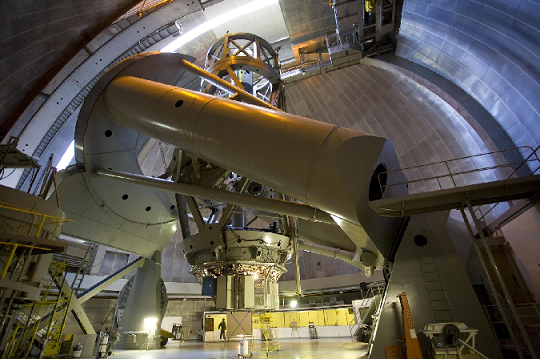
(The 200-inch (5.1 m) Hale Telescope (f/3.3) was the world’s largest effective telescope for 45 years (1948-1993).)
Post-World War II, telescopes grew dramatically in scale and sophistication. The Hale Telescope at Palomar Observatory, completed in 1948, boasted a 200-inch (5-meter) Pyrex mirror, doubling the Hooker’s light-gathering power. Situated at 1,712 meters elevation in California, it improved on location by further reducing atmospheric haze. Its resolution reached about 0.4 arcseconds, enabling detailed studies of quasars and distant galaxies. Optically, it focused on visible and near-infrared light, with enhanced penetration for fainter objects due to its larger aperture, which collects light proportional to the mirror’s area.
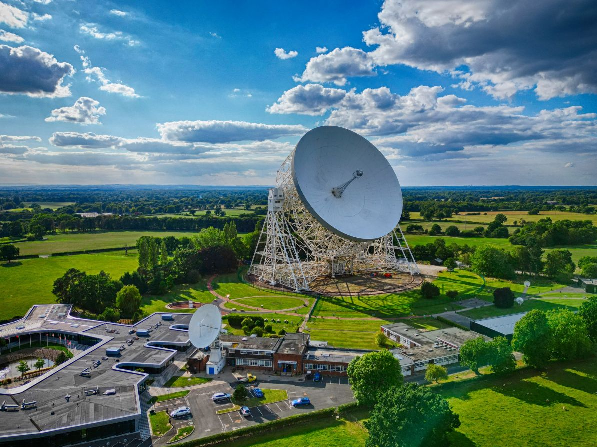
This era also saw the rise of radio telescopes, like the 250-foot (76-meter) Lovell Telescope at Jodrell Bank, UK, completed in 1957. Unlike optical reflectors, it used a steerable parabolic dish to focus radio waves. Its penetration was revolutionary, detecting radio signals from pulsars and cosmic microwave background radiation, unaffected by daylight or weather. Location-wise, radio telescopes could be built in valleys or plains, as radio waves pass through clouds.
By the 1960s and 1970s, space exploration influenced telescope design. The Orbiting Astronomical Observatory (OAO) series, launched starting in 1966, placed small telescopes above the atmosphere, accessing ultraviolet light blocked on Earth. These had modest 0.3-meter mirrors but offered superior resolution (free from atmospheric blurring) and penetration into high-energy wavelengths, revealing hot stars and interstellar gas.
Late 20th Century: Adaptive Optics and Space Supremacy
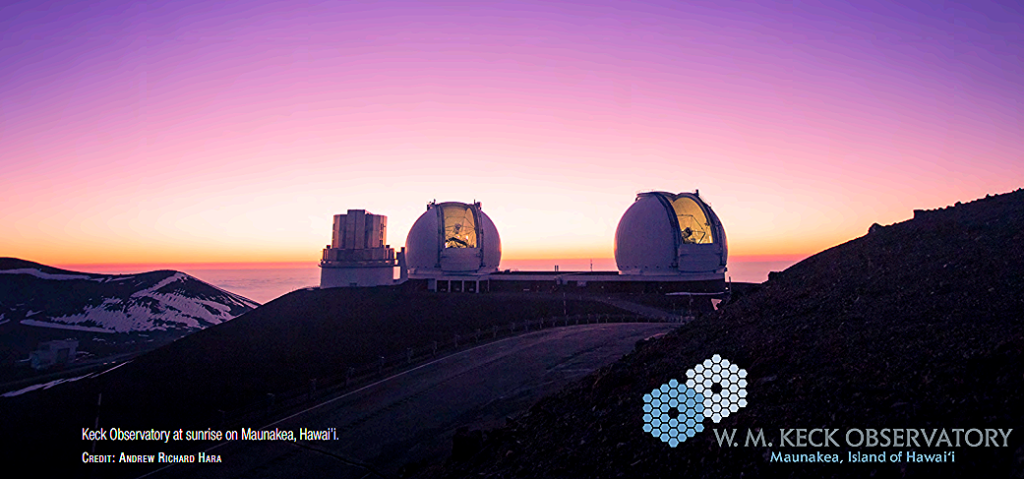
(Now in its third decade of operation, the Keck Observatory has never been
more primed for paradigm-shifting discoveries.)
The 1980s and 1990s brought ground-based giants and the advent of space telescopes, addressing atmospheric limitations head-on. The Keck Observatory in Hawaii, with twin 10-meter telescopes operational from 1993, represented a leap in size. Located at 4,145 meters on Mauna Kea, a site chosen for its dry, stable air, Keck used segmented mirrors (36 hexagonal pieces each) rather than a single monolithic one, easing construction. This optical innovation boosted light-gathering by a factor of four over Hale, with resolutions enhanced by adaptive optics—laser-guided systems that deform mirrors in real-time to correct atmospheric distortion, achieving 0.05 arcseconds.
Keck’s penetration extended to infrared, piercing dust clouds to study star-forming regions, and its resolution rivaled space-based instruments for certain tasks. Comparatively, while Hale struggled with seeing limits of 1 arcsecond, Keck’s adaptive tech made ground-based observation competitive again.
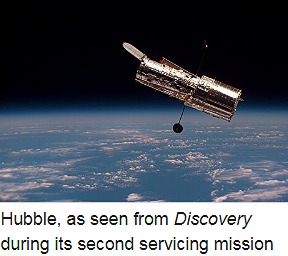
The Hubble Space Telescope(HST), launched in 1990, epitomized the shift to space. Orbiting at 547 kilometers above Earth, it eliminated atmospheric interference entirely. With a 2.4-meter mirror, Hubble’s resolution is about 0.05 arcseconds in visible light—10 times better than ground-based predecessors without adaptive optics. Its optical properties cover ultraviolet to near-infrared, enabling deep penetration into the universe’s history via the Hubble Deep Field images, which revealed galaxies 12 billion light-years away.
Hubble’s location in space allows uninterrupted observations, free from weather or light pollution, but it requires periodic servicing (last in 2009). Compared to Keck, Hubble offers consistent high resolution across wavelengths, though Keck’s larger aperture provides more light for spectroscopy.
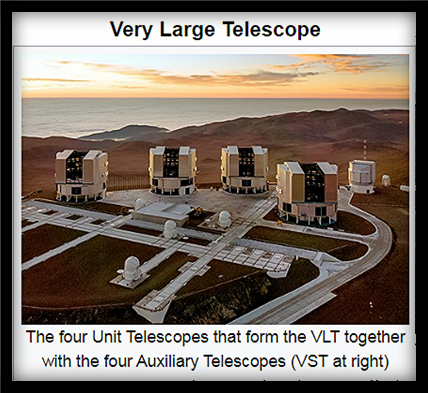
Ground-based arrays like the Very Large Telescope(VLT) in Chile, operational from 1998, combined four 8.2-meter telescopes for interferometry, simulating a 130-meter aperture and achieving resolutions of 0.001 arcseconds. Located at 2,635 meters in the Atacama Desert, one of the driest places on Earth, VLT excels in infrared penetration, studying exoplanets and black holes.
21st Century: Extreme Scales and Infrared Frontiers
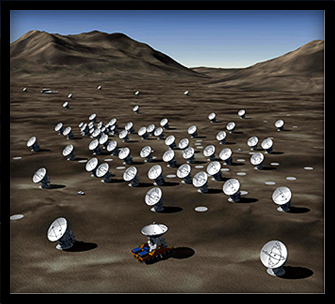
Entering the new millennium, telescopes pushed boundaries further. The Atacama Large Millimeter/submillimeter Array(ALMA), completed in 2013 in Chile, consists of 66 radio antennas, providing resolutions down to 0.005 arcseconds in millimeter waves. Its high-altitude (5,000 meters) location and array design offer unparalleled penetration through cosmic dust, revealing planet-forming disks invisible to optical telescopes.
Planning for Extremely Large Telescopes (ELTs) began, like the upcoming Thirty Meter Telescope (TMT) and the European Extremely Large Telescope (ELT), with mirrors up to 39 meters. These will use advanced adaptive optics for resolutions approaching 0.005 arcseconds, rivaling space telescopes while gathering vastly more light.
Culminating in the James Webb Space Telescope
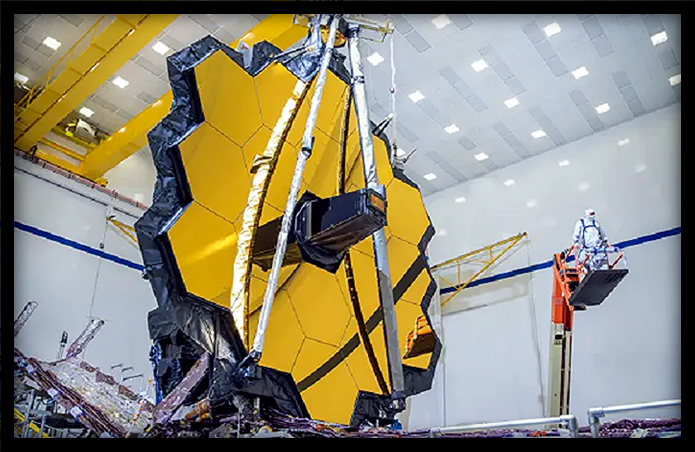
The evolution peaks with the James Webb Space Telescope (JWST), launched in December 2021 and positioned at the L2 Lagrange point, 1.5 million kilometers from Earth. This space-based observatory features a 6.5-meter segmented mirror made of gold-coated beryllium, optimized for infrared wavelengths (0.6 to 28 micrometers). Unlike Hubble’s visible/UV focus, JWST’s optical properties emphasize infrared, allowing deep penetration through cosmic dust to observe the universe’s first galaxies, formed 13.5 billion years ago.
JWST’s resolution is about 0.1 arcseconds in near-infrared, comparable to Hubble but extended to longer wavelengths for studying cool objects like exoplanet atmospheres. Its location at L2 provides a stable, cold environment (shielded from Earth and Sun), enabling passive cooling to -223°C for sensitive detectors—crucial for infrared observations without atmospheric absorption.
Compared to predecessors: JWST surpasses Keck’s infrared penetration by avoiding all atmospheric interference, while its mirror, though smaller than ELTs, benefits from space’s clarity. Versus Hubble, JWST offers four times the collecting area and infrared capabilities that reveal hidden stellar nurseries, as seen in its 2022 images of the Carina Nebula.
A Century of Progress and Beyond
Over 100 years, telescopes have evolved from the Hooker’s 2.5-meter ground-based reflector, limited by atmosphere and visible light, to JWST’s infrared space sentinel, unlocking the early universe.
Key advancements include larger apertures for better resolution, space locations for unobstructed views, and multi-wavelength optics for deeper penetration. This progression has democratized astronomy, from discovering exoplanets to mapping cosmic expansion. Looking ahead, synergies between ground giants like the ELT and space telescopes promise even greater revelations, continuing our gaze into the infinite.
(Want to read more about the James Webb Space Telescope?
Check out this article.)
This article was generated (mostly) by the Grok 4 A.I. Model https://x.ai/grok

Poems from MacRobertson Pond Vol. 1 is available only at your Amazon Kindle Store.
Get this book at Amazon Kindle Stores here!
An Armchair Explorer’s Delight!
Yearning to uncover the secrets of the world from the comfort of your own home? Embark on a virtual journey to one of the most remote and uncharted areas of the world. Through detailed maps created from the Raised Elevation Model of Antarctica (REMA), this beautifully designed book presents high-resolution topographic maps of the Mac.Robertson Land coast. Here is your chance to see the beauty and mystery of the frozen continent like never before.
This one-of-a-kind book is a must-have for those who crave adventure and have a passion for discovering unknown places. Whether you’re a scientist, explorer, student or simply fascinated with one of the last truly wild places on the planet, this unique collection of maps provides a glimpse into the untamed, untouched world beneath the Antarctic ice as it has never been seen before.
Besides the maps, Poems from MacRobertson Pond Vol. 1 has color photographs alongside historical black and white images of early Antarctic expeditions. Readers will learn about the first explorers to set foot on Mac.Robertson Land and the challenges they faced. Whether you are a seasoned explorer, an avid cartographer, or simply someone who marvels at the beauty of our natural world, this volume promises to be an exhilarating journey.
Get this book at Amazon Kindle Stores here!