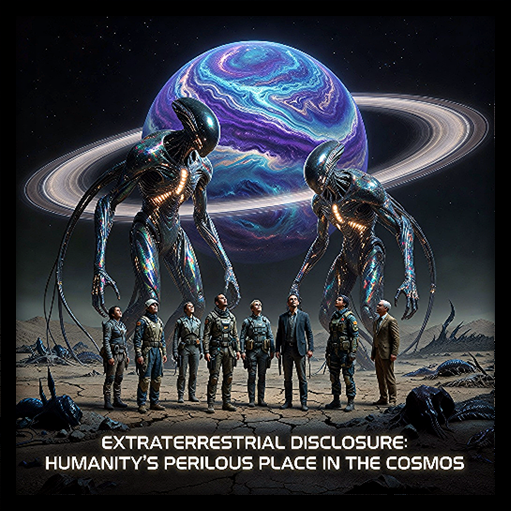
“In an era where declassified government documents, whistleblower testimonies, and unexplained aerial phenomena (UAP) dominate headlines, the question of extraterrestrial disclosure has never been more pressing. Let us proceed under the assumption—supported by mounting evidence—that non-human biological entities (extraterrestrials, or ETs) not only exist but actively interact with humanity.” Read the full article.
Introduction
“One does not become enlightened by imagining figures of light, but by making the darkness conscious.”
– Carl Jung (1875-1961)
Humanity stands at a crossroads of ingenuity and peril, a species capable of breathtaking innovation yet plagued by primal instincts that threaten its own survival and beyond. We are, in essence, primitive, savage, and dangerous—traits that manifest in our history, our societies, and our interactions with the world.
This assessment isn’t merely a human introspection; it echoes in reports of extraterrestrial (ET) observations, where advanced beings purportedly view us as technological toddlers wielding catastrophic toys. By weaving together earthly self-reflection and alleged cosmic critiques, we can better understand the depths of our flaws and the urgent need for evolution.
This article explores these dimensions, drawing from historical patterns, environmental impacts, technological escalations, and psychological underpinnings, while considering how ETs might perceive our precarious state.
Background
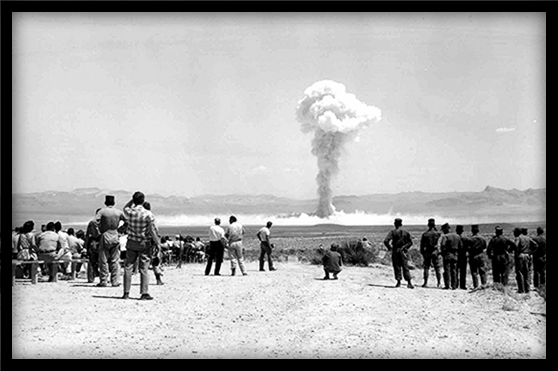
(Trinity nuclear test in New Mexico. Trinity was the first detonation of a nuclear weapon, at 11:29:21 GMT) on July 16, 1945, as part of the Manhattan Project.)
At our core, humans embody a biological primitiveness that limits our potential and amplifies our risks. Our lifespans average a mere 80 years, riddled with diseases and sensory constraints (contrasting sharply with ET reports of beings who live for millennia with enhanced perceptions!). This biological baseline sets the stage for our savage behaviors, which have persisted despite cultural and technological advancements.
Violence and organized conflict remain hallmarks of human society, from ancient intertribal raids to modern global wars. We’ve institutionalized aggression as a means of resource acquisition, status, and control, evolving tools from clubs and spears to firearms and strategic bombing. Mass atrocities like genocides and ethnic cleansings reveal how ideologies can mobilize ordinary people into extreme cruelty. ET assessments, as detailed in various disclosures, amplify this view, labeling us as savages defined by internecine violence and what they see as “ecological rape.”
Historical examples abound: the two World Wars, the atomic bombings of Hiroshima and Nagasaki that vaporized over 200,000 lives, and the Holocaust’s systematic extermination of 6 million. Contemporary conflicts in Ukraine, Gaza, and Yemen continue this pattern, shocking purported ET observers. Former Canadian Defense Minister Paul Hellyer has claimed ETs monitor our nuclear arsenals, horrified by doctrines like mutually assured destruction.
Interventions, such as UFO swarms during the 1945 Trinity nuclear test or incidents documented in Robert Hastings’ UFOs and Nukes—where ETs allegedly disabled launch systems—underscore their perception of our “barbaric” tendencies. These beings view our nuclear volatility as the playthings of unevolved primitives.
Beyond direct violence, our savagery extends to the natural world, where short-sighted exploitation has wrought catastrophic damage. Industrialization, deforestation, pollution, and species extinction reflect a primitive focus on immediate gain over long-term sustainability.
Ecosystems that sustained civilizations for millennia have been altered or destroyed in pursuit of economic growth, with little regard for shared survival. Annually, we emit 1.2 trillion tons of CO2, contributing to a 75% loss in wildlife populations since 1970, according to the World Wildlife Fund. Deforestation rivals the impact of asteroid strikes, while plastic-choked oceans suffocate marine life.
Technological progress, far from taming these impulses, has often magnified them, providing new avenues for harm. Innovations meant to enhance life—nuclear energy, biotechnologies, automated systems—enable more efficient killing, surveillance, and coercion.
Foreground
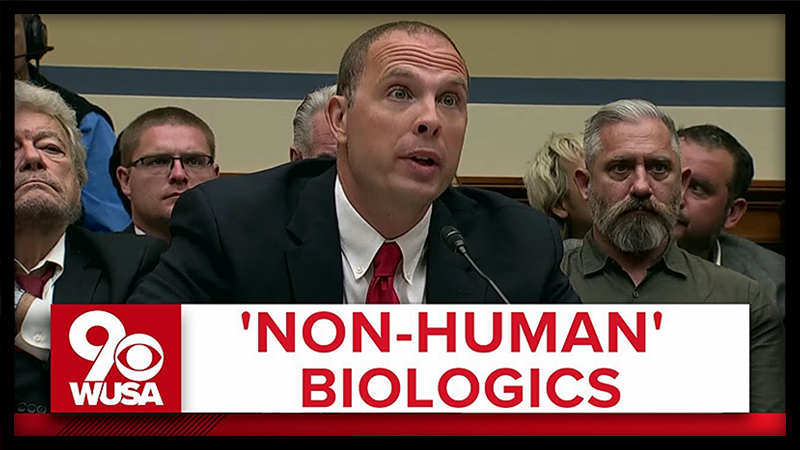
(David Grusch testifying before USA Congress on July 26, 2023)
When moral frameworks fail to keep pace, the potential for misuse escalates. Bioweapons, exemplified by COVID-19 lab leak theories and historical anthrax programs, amplify the peril. Whistleblowers like Emery Smith suggest ETs quarantine us to prevent weaponized plagues from spreading starward. Our expansionism, from Voyager probes carrying naive greetings to militarized space initiatives like the U.S. Strategic Defense Initiative (Star Wars), alarms them. The hypersonic arms race among China, Russia, and the U.S. is positioning us as dangerous interlopers in cosmic affairs.
Psychologically and socially, underlying mechanisms fuel these dangers. Cognitive biases, in-group loyalty, dehumanization, and resource competition trigger aggression and rationalize cruelty. Social hierarchies and power imbalances encourage exploitation, with systems sometimes rewarding predatory actions. Inequality is rampant: 26 billionaires hold the wealth of 3.8 billion of the world’s poorest, while racism and sexism persist.
David Grusch’s references to programs like “Immaculate Constellation” imply ET enforcement of no-fly zones over sensitive sites, containing our proliferation risks. This containment reflects a benevolent yet cautious stance: we’re observed, not embraced, until we mature. Recognizing these traits—primitive biology, savage behaviors, and dangerous technologies—is not defeatist but a catalyst for change.
Carl Jung’s archetypes warn of eruptions from our collective unconscious, and ETs allegedly delay full disclosure fearing a “savage backlash”—riots, theocratic crusades against “demons,” or even attempts to nuke their craft. Examples of their interventions, from nuclear jamming to environmental warnings, suggest a guiding hand, urging us toward stewardship rather than savagery. Yet, our track record of ignoring such signs—dismissing UFO evidence or sidelining climate accords—reinforces their wariness.
Conclusion
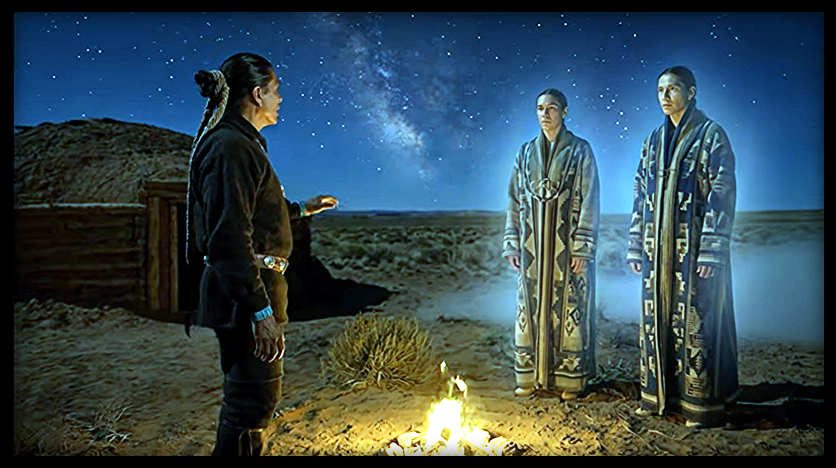
Ultimately, humanity’s paradox lies in our capacity for both creation and destruction. By acknowledging our primitive, savage, and dangerous aspects through self-reflection and cosmic critique, we can strive for vigilance and growth. Confronting our darker nature is essential to mitigate risks to ourselves and the planet. Only then might we evolve beyond our earthly confines, proving to ourselves and any watchful ETs that we are ready for the galaxy’s embrace.
Until that day, our isolation serves as a stark reminder: the greatest threat we face is not from the stars, but from within.
This article was generated (mostly) by the Grok 4 A.I. Model https://x.ai/grok
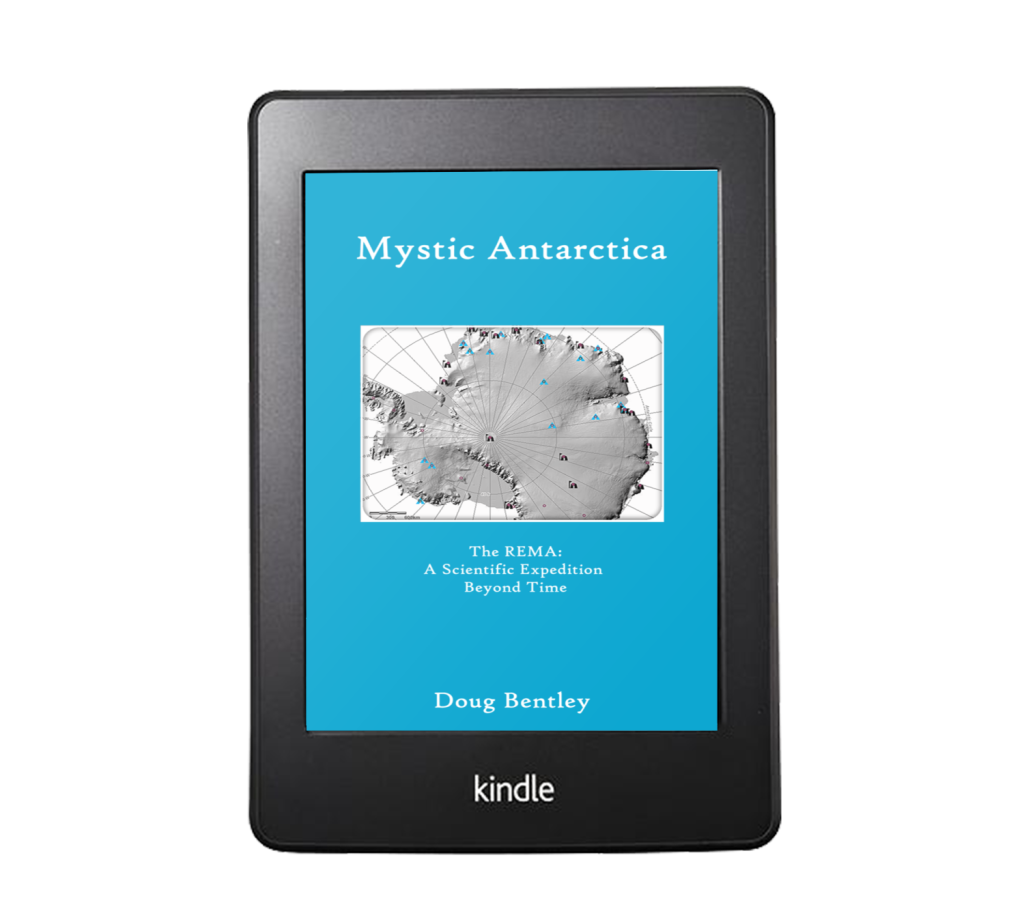
Mystic Antarctica is available only at the Amazon Kindle Store.
Mystic Antarctica at Amazon Kindle Stores here!
An Incredible Book of Maps of Antarctica!
Are you fascinated by the mysterious, remote, and awe-inspiring continent of Antarctica? This vast region, which holds a special place in our imaginations, is now available to explore like never before. Sourced from the new Raised Elevation Model of Antarctica (REMA), Mystic Antarctica brings you 75 of the highest resolution topographic maps of Antarctica ever created.
Whether you’re a scientist, explorer, student or simply fascinated with one of the last truly wild places on the planet, this unique collection of maps provides a glimpse into the untamed, untouched world beneath the Antarctic ice as it has never been seen before.
Treat yourself to this one-of-a-kind glimpse of Antarctica in all its majestic detail and mystique. And, if you’re searching for a unique, thoughtful gift for the adventurer, geographer, or map lover in your life, look no further than Mystic Antarctica.
Mystic Antarctica at Amazon Kindle Stores here!