(This is the second article on quantum computer breakthroughs.
To read the introductory article go here.)
Building on photonic advancements discussed in the previous article, a parallel quantum revolution is unfolding at the intersection of biology and quantum mechanics. Researchers at the University of Chicagohave developed biological qubits using fluorescent proteins derived from jellyfish. This innovation bypasses traditional quantum computing hurdles like cryogenic cooling and vacuum isolation, leveraging nature’s molecular machinery for quantum operations at room temperature.
From Fluorescent Proteins to Quantum Hardware: The Experimental Journey
At its core, a qubit is a two-level quantum system, typically implemented in superconducting loops, trapped ions, or photonic modes. Biological qubits exploit chromophores in green fluorescent proteins (GFPs), which exhibit quantum coherence in their excited states. These proteins, responsible for bioluminescence in marine organisms, can be genetically engineered into cells. The Chicago team demonstrated that these proteins maintain superposition and entanglement over timescales sufficient for senscaling—on the order of nanoseconds to microseconds. By exciting the protein with laser pulses, researchers create a coherent superposition state.
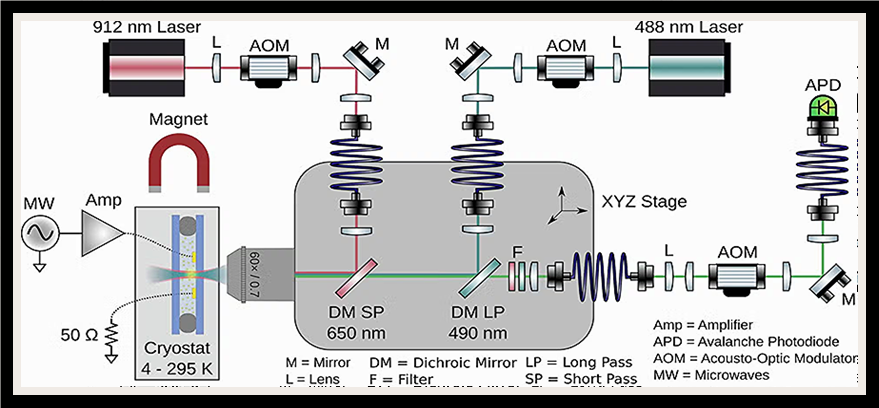
The implications extend to quantum biology. By integrating qubits into cells, we can test these hypotheses directly. For instance, inserting GFP-based sensors into neurons could map quantum coherence in synaptic transmission, informing neuromorphic computing models.
However, merging quantum tech with biology raises profound questions. Transhumanist visions of enhanced cognition—via quantum-augmented neural interfaces—must contend with risks. Quantum operations could inadvertently disrupt cellular homeostasis; for example, prolonged coherence might interfere with enzymatic reactions. Ethically, altering “the building blocks of life” invokes debates on natural design versus human engineering.
Why Biological Qubits Could Reshape Computing and Medicine
In quantum computing contexts, biological qubits could inspire hybrid systems. Imagine quantum networks where cellular sensors feed data to photonic processors. This ties back to the Danish breakthrough: biological quantum systems could be accelerated using entangled light. Speculatively, within five years, this could lead to quantum-enhanced diagnostics. Portable devices might use bio-qubits for early cancer detection by sensing aberrant magnetic signatures in tissues.
Yet, scalability is a hurdle: protein qubits have short coherence times compared to engineered systems, necessitating error correction via ensemble averaging or dynamical decoupling. Broader impacts span drug discovery, where quantum sensors could simulate molecular interactions. In climate science, bio-qubits in microbes could monitor environmental toxins at molecular levels, aiding ecological modeling.
Critically, we must address safety: unintended quantum effects might induce mutations or toxicity. Regulatory frameworks will be essential. Philosophically, this blurs human-machine boundaries, prompting questions on identity in a quantum-augmented era.
In essence, biological qubits represent a paradigm shift, embedding quantum computation into life’s fabric. They promise unprecedented insights into complex systems while challenging us to navigate the ethical frontiers of bio-quantum integration.
This article was generated (mostly) by the Grok 4 A.I. Model https://x.ai/grok

Poems from MacRobertson Pond Vol. 1 is available only at your Amazon Kindle Store.
Get this book at Amazon USA here!
An Armchair Explorer’s Delight!
Yearning to uncover the secrets of the world from the comfort of your own home? Embark on a virtual journey to one of the most remote and uncharted areas of the world. Through detailed maps created from the Raised Elevation Model of Antarctica (REMA), this beautifully designed book presents high-resolution topographic maps of the Mac.Robertson Land coast. Here is your chance to see the beauty and mystery of the frozen continent like never before.