Traditional qubits decohere in microseconds due to environmental noise., but Alice & Bob’s breakthrough extends this to 3,600 seconds—a millionfold improvement.

Trifles, Light as Air
Traditional qubits decohere in microseconds due to environmental noise., but Alice & Bob’s breakthrough extends this to 3,600 seconds—a millionfold improvement.

Building on photonic advancements discussed in the previous article, a parallel quantum revolution is unfolding at the intersection of biology and quantum mechanics. Researchers at the University of Chicagohave developed biological qubits using fluorescent proteins derived from jellyfish. This innovation bypasses traditional quantum computing hurdles like cryogenic cooling and vacuum isolation, leveraging nature’s molecular machinery for quantum operations at room temperature.
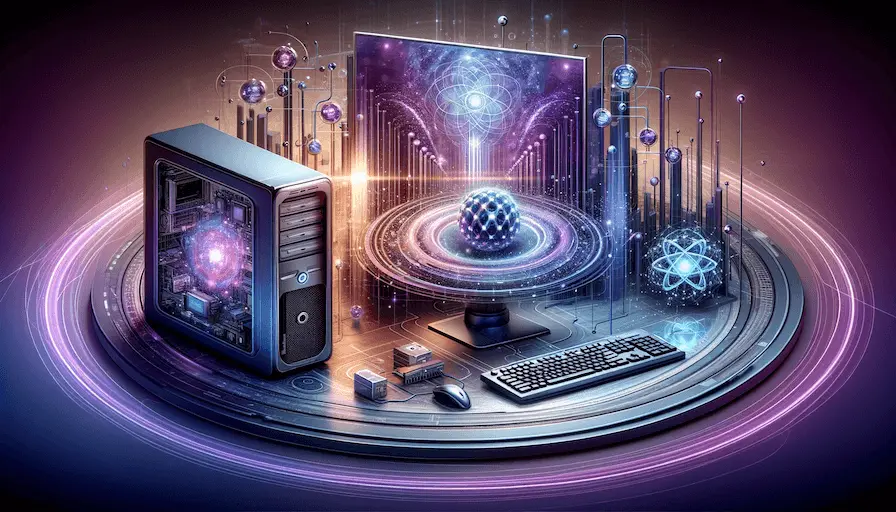
This breakthrough involves characterizing a noisy quantum system, a task that scales exponentially in complexity for classical computers, potentially requiring up to 20 million years of computation time. Remarkably, the team accomplished this in just 15 minutes using entangled light beams.