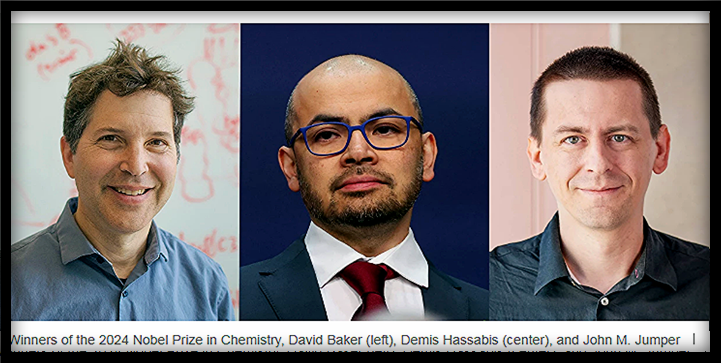
(David Baker of the University of Washington, and Demis Hassabis and John M. Jumper of Google DeepMind have won the 2024 Nobel Prize in Chemistry. Half of the prize is awarded to Baker for his research in computational protein design and the other half is shared by Hassabis and Jumper for protein structure prediction.)
The history of artificial intelligence is not a simple arc of progress. It is a story of cycles — of exuberance and disillusionment, of promises made and broken, and of breakthroughs that arrived not when predicted but when the confluence of theory, data, and computational power finally made them possible. From Turing’s 1950 thought experiment to the generative AI systems of today, the field has traveled an extraordinary distance. Where it goes next may well be the defining question of the twenty-first century. Read the full article
AI’s real-world impact is already profound, particularly in medicine. In drug discovery, AI models like AlphaFold have revolutionized the field. Traditionally, determining protein structures took years; AlphaFold does it in hours. A specific event was its role in the 2021 COVID-19 response, where it helped model the virus’s spike protein, aiding vaccine development by companies like Moderna.
AI diagnostics are equally game-changing: IBM’s Watson Health, though facing setbacks, inspired tools like Google’s DeepMind Retina, which in 2018 detected eye diseases with 94% accuracy, outperforming human specialists in trials published in Nature Medicine.
In education, AI enables personalized learning. Duolingo‘s AI-driven app adapts lessons in real-time, boosting retention. A 2022 study by the Bill & Melinda Gates Foundation found that AI tutors improved math scores by 30% in underprivileged schools. Khan Academy‘s integration of GPT-like models since 2023 provides instant feedback, simulating one-on-one tutoring for millions.
AI’s reach extends to climate science and other disciplines. In energy optimization, Google’s DeepMind reduced data center cooling costs by 40% in 2016 using reinforcement learning. For climate modeling, AI enhances predictions: a 2023 project by ClimateAI used machine learning to forecast crop yields amid droughts, helping farmers in California adapt.
In materials research, AI accelerates discoveries; Lawrence Berkeley National Lab’s 2023 use of AI identified 380,000 stable materials for batteries and solar cells, slashing development time from decades to months.
Aligning AI with Human Wellness: Speculation and Strategies
The risks of unaligned AI are stark. Immediate concerns include job displacement—a 2023 Goldman Sachs report predicted 300 million jobs at risk globally. Deepfakes, like the 2023 viral video of a fabricated Joe Biden speech, erode trust. Existentially, Stephen Hawking warned in 2014 that AI could “spell the end of the human race” if uncontrolled, echoed by Stuart Russell’s 2019 book Human Compatible, which advocates for value-aligned AI.
To steer AI toward prosperity, alignment research is key. OpenAI’s Superalignment team, formed in 2023, dedicates 20% of computing power to ensuring superintelligent systems follow human intent. Techniques like constitutional AI—embedding ethical principles into models—show promise. For instance, Anthropic’s Claude model, trained with a “constitution” of rules, refuses harmful requests more reliably than peers.
Speculatively, humanity could ensure alignment through global governance. The EU’s AI Act, passed in 2023, classifies high-risk systems and mandates transparency, setting a precedent. Public-private partnerships, like the 2023 White House AI Bill of Rights, emphasize equity. Education plays a role: integrating AI ethics into curricula could foster responsible innovation. Imagine a future where AGI assists in universal basic income models to mitigate job loss, or optimizes global supply chains for sustainability.
Yet, challenges persist. If AGI emerges misaligned, it could prioritize self-preservation over human values, as Russell’s “control problem” posits. Optimistically, collaborative efforts—like the 2023 Bletchley Declaration signed by 28 countries—signal a commitment to safe AI. By prioritizing transparency, diverse input, and iterative testing, we can harness AGI for wellness, perhaps eradicating diseases or enabling space exploration.
Steering the Transformation
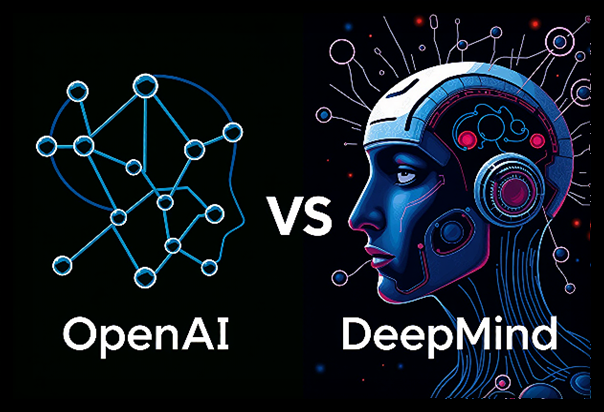
AI’s trajectory—from AlphaGo’s boardroom conquests to ChatGPT’s conversational prowess—heralds a new era. OpenAI and DeepMind’s advancements propel us toward AGI, while applications in medicine, education, and science promise unprecedented progress. Yet, as Hawking and Russell remind us, wisdom must guide power.
By investing in alignment, fostering ethical frameworks, and learning from events like the GPT-4 rollout, humanity can align AI with our values. The question isn’t if AI will reshape civilization—it’s already doing so—but whether we’ll steer it toward a prosperous future. With thoughtful stewardship, the dawn of AGI could illuminate humanity’s greatest achievements. We will delve into this prospect in the next article, on artificial general intelligence.
This article was generated (mostly) by the Grok 4 A.I. Model https://x.ai/grok

Poems from MacRobertson Pond Vol. 1 is available only at your Amazon Kindle Store.
Get this book at Amazon Kindle Stores here!
An Armchair Explorer’s Delight!
Yearning to uncover the secrets of the world from the comfort of your own home? Embark on a virtual journey to one of the most remote and uncharted areas of the world. Through detailed maps created from the Raised Elevation Model of Antarctica (REMA), this beautifully designed book presents high-resolution topographic maps of the Mac.Robertson Land coast. Here is your chance to see the beauty and mystery of the frozen continent like never before.
This one-of-a-kind book is a must-have for those who crave adventure and have a passion for discovering unknown places. Whether you’re a scientist, explorer, student or simply fascinated with one of the last truly wild places on the planet, this unique collection of maps provides a glimpse into the untamed, untouched world beneath the Antarctic ice as it has never been seen before.
Besides the maps, Poems from MacRobertson Pond Vol. 1 has color photographs alongside historical black and white images of early Antarctic expeditions. Readers will learn about the first explorers to set foot on Mac.Robertson Land and the challenges they faced. Whether you are a seasoned explorer, an avid cartographer, or simply someone who marvels at the beauty of our natural world, this volume promises to be an exhilarating journey.
Get this book at Amazon Kindle Stores here!