The Medium is the Message: McLuhan’s Timeless Quip Takes Flight in the Age of Drones and Flying Cars
Ah, Marshall McLuhan— the Canadian oracle of media who looked at televisions and typewriters and saw not just gadgets, but extensions of our very nervous systems. In 1964, he dropped a bombshell in his book Understanding Media: The Extensions of Man. That bombshell? “The medium is the message.”
It’s not some cryptic crossword clue; it’s a sly reminder that the way we deliver information shapes us more than the info itself. Picture this: the printing press didn’t just print Bibles; it birthed the Renaissance, splintered religions, and turned solitary scholars into a chattering class. The medium isn’t neutral—it’s a sneaky architect of society, embedding itself in our perceptions like a tattoo we didn’t ask for but can’t erase.
McLuhan, the “father of media studies,” wasn’t saying content is chopped liver. No, he meant we can’t pry the message from its delivery van. The form molds the content, and in turn, reshapes our world. It’s like how a whisper in a library feels intimate, but the same words blasted from a megaphone turn revolutionary. Fast-forward to today, and McLuhan’s wit rings truer than ever in our drone-dotted skies and the pipe-dream promise of flying cars. These aren’t just toys for tech bros; they’re media that mess with our senses, identities, perceptions, and social dances.
First, let’s buzz into drones. These whirring wonders are the ultimate remote control for reality, turning pilots into armchair adventurers and warfare into a video game. Sensory-wise, drones extend our eyes and ears into the ether, but they numb our other senses in the process. Drones extend our vision to god-like heights, but they amputate the tactile terror of being there. Take the 2019 Amazon Prime Air drone deliveries—zipping packages to your doorstep without a human in sight. Suddenly, shopping isn’t a stroll to the store; it’s a skyward summons. Your senses shift: no more chatting with the clerk, no scent of fresh bread wafting from the bakery. Instead, you’re attuned to the faint buzz overhead, your world flattened into a GPS grid. We’ve traded the medium of feet-on-pavement for wings-on-wind, and now our sensory life is less grounded, more pixelated. Who needs the thrill of traffic when you can have the drone of delivery?
But drones don’t just deliver; they surveil, turning privacy into a punchline. In 2020, during the George Floyd protests, police drones hovered over Minneapolis crowds like nosy neighbors with night vision. Suddenly, your identity as a private citizen morphs into a data point in a vast aerial net. “The medium is the massage” because drones massage our sense of self into submission. You’re no longer just you; you’re a heat signature, a tracked trajectory.
This reshapes perceptions too—paranoia becomes the new normal. In China, where drone swarms monitor everything from traffic to tiger poaching, citizens perceive public space as a panopticon playground. Forget spontaneous gatherings; protests now factor in anti-drone tech. Face masks and white papers jam flying spies that make Big Brother look like a peeping Tom with binoculars.
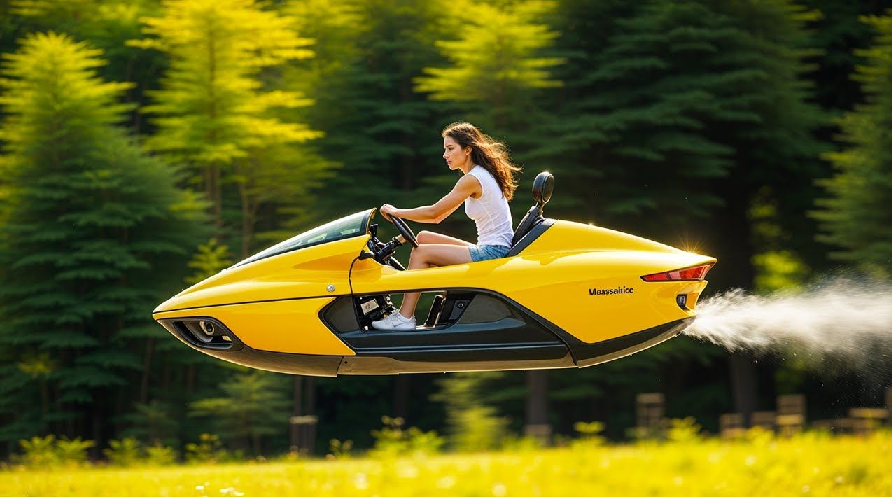
Now, pivot to flying cars—those Jetsons fantasies inching toward reality with eVTOLs (electric vertical takeoff and landing vehicles). Companies like Joby Aviation and Lilium are testing prototypes that promise to whisk us above gridlock. McLuhan’s message magic applies here: these aren’t just cars with propellers; they’re a new medium for mobility that warps our sensory universe. Imagine zipping from LA to San Francisco in under an hour—no more highway hypnosis, just bird’s-eye bliss.
But sensory life gets a jolt: the rumble of tires gives way to the whoosh of rotors, heightening our vestibular senses while dulling our connection to the earth. It’s witty irony—flying cars extend our legs into the sky, but they might make us motion-sick nomads, perceiving distance not in miles, but in vertigo-inducing vistas.
Identity? Buckle up. Flying cars could democratize the skies, but they’ll likely stratify society further. Picture Uber Air: the elite jetting over traffic while the rest slog below. In Dubai, where Volocopter tested passenger drones in 2017, it’s already a status symbol—your identity shifts from “commuter” to “sky elite” or “grounded grunt.” Altitude equals attitude. Perceptions of time and space compress; what was a day’s drive becomes a coffee-break commute, altering how we value proximity.
Social processes evolve too—urban planning flips. Cities like Singapore are eyeing vertiports, turning rooftops into hubs. But here’s the humorous hitch: noise pollution from these buzzing beasts could make neighborhoods sound like perpetual beehives, fracturing community bonds. NASA’s 2023 Urban Air Mobility studies predict flying cars could cut commute times by 50% in places like Dallas, but at the cost of “sky rage”—new social tensions from aerial traffic jams.
Delving deeper, both drones and flying cars tinker with our perceptions of power and vulnerability. Drones in warfare, like the U.S. military’s Reaper drones striking targets in Afghanistan from Nevada bases, create a perceptual disconnect. The operator sees a high-def feed, but feels no recoil, no dust in their lungs. It’s McLuhan’s hot vs. cool media in action—drones are “cool,” demanding participation (zooming in on targets), yet they chill the empathy. It’s remote-controlled detachment, where death is a button-press away. Soldiers become cyborgs, their sense of self extended but fragmented—PTSD from pixels, not shrapnel. Socially, it globalizes conflict; a drone strike in Yemen ripples into online radicalization worldwide.
Flying cars, meanwhile, promise perceptual paradise but deliver pandemonium. Take Archer Aviation’s 2024 partnership with United Airlines for electric air taxis in Chicago—envision O’Hare as a skyport. Perceptions of urban density change: skyscrapers aren’t barriers; they’re launchpads. But sensory overload looms—constant overhead traffic could heighten anxiety, making us perceive the sky as cluttered as our inboxes. Flying cars are the message that we’re all Icarus now, flapping toward the sun with battery packs. They could erode public transit, widening inequality. In India, where EHang tested autonomous aerial vehicles in 2022 for medical deliveries, it’s a boon for remote villages, but it messages that progress flies over the poor, not with them.
In sum, McLuhan’s phrase endures because media like drones and flying cars aren’t mere tools—they’re the tail wagging the societal dog. They amplify our senses while blinding us to others, forge identities in the clouds, skew perceptions toward the ethereal, and remix social symphonies into chaotic choruses. As we hurtle toward this airborne future, let’s heed McLuhan’s witty warning: the medium isn’t just carrying the message; it’s hijacking the whole conversation.
Who knows? Maybe the next big idea will be delivered by drone—buzzing straight into our collective unconscious.
This article was generated (mostly) by the Grok 4 A.I. Model https://x.ai/grok
PAPERBACK RETAILERS
Amazon
Books A Million
Alibris
Abe Books
Bookshop
Take a Look Inside!
Ladies and Gentlemen of the Theatre…. A Comedy of Absurdities!
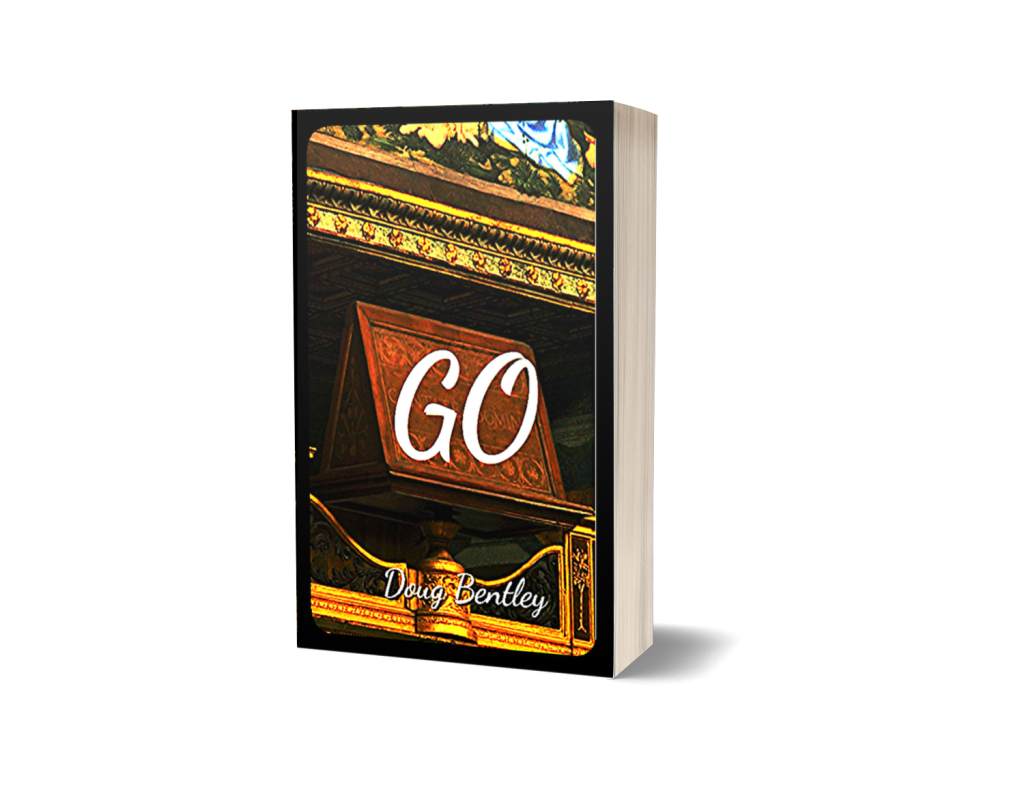
Step through the looking glass with this revolutionary new play. GO takes your average night at the theatre and throws it out the window.
Filled with wit, slapstick, satire, insight and backbite, GO packs entertainment for all. Audiences will be charmed by the quirky characters who come and go throughout GO’s four imaginative acts. This mind-bending script inspires truly visionary direction, and rewards actors with an array of emotionally compelling roles. You can trust GO to deliver an unforgettable night at the theatre.