
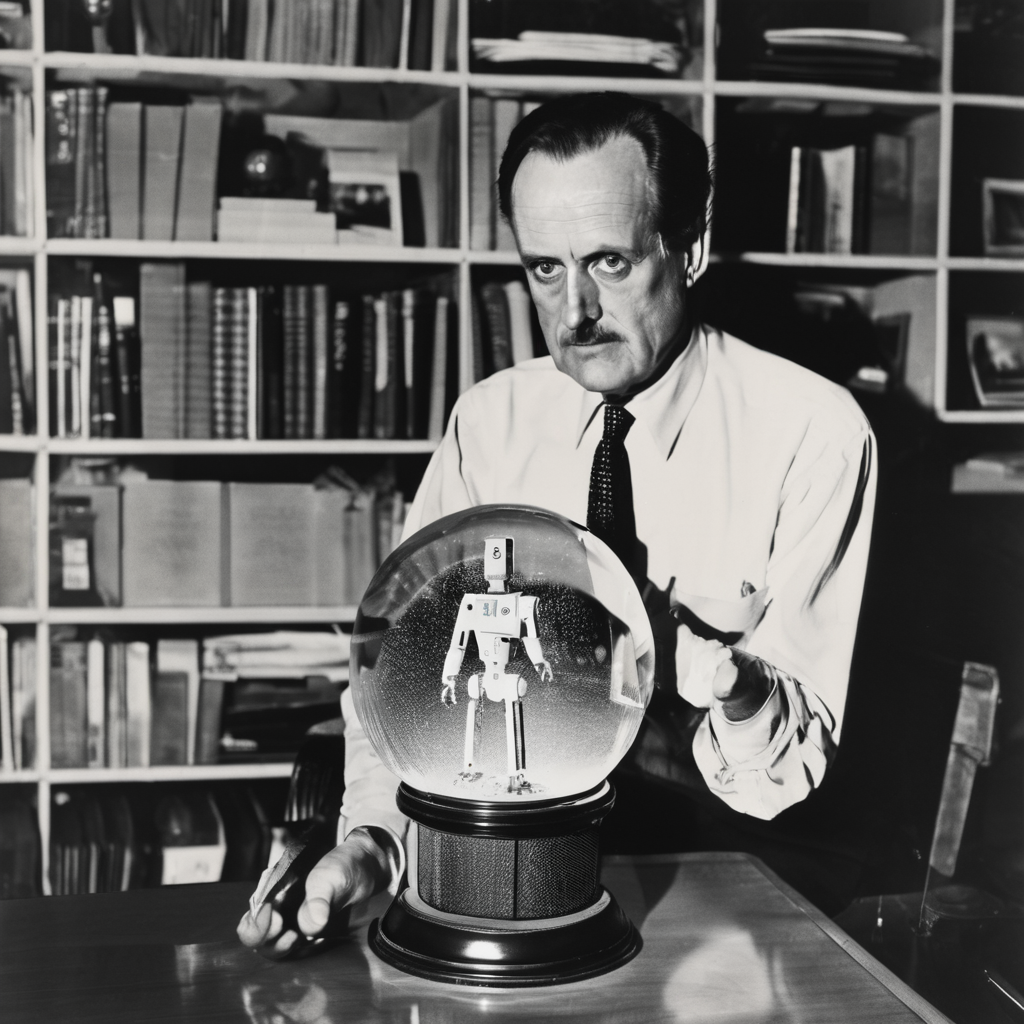
The Medium is the Message: McLuhan’s Timeless Insight in the Age of Automation and Robotics
In the realm of media theory, few phrases have resonated as profoundly as “The medium is the message.” Coined by the Canadian philosopher and media theorist Marshall McLuhan (1911-1980), this concept posits that the form or channel through which information is conveyed—the medium—exerts a far greater influence on society and human perception than the content itself. It’s not that the message is unimportant, but rather that the medium embeds itself inextricably into the message, shaping our culture, behaviors, and worldviews in subtle yet pervasive ways. For instance, the printing press didn’t merely disseminate books; it transformed education, religion, and the very structure of knowledge.
McLuhan first introduced this idea in his seminal 1964 book, Understanding Media: The Extensions of Man. As the “father of media studies,” McLuhan argued that media act as extensions of our senses and bodies, altering how we interact with the world. McLuhan’s framework feels eerily prescient when applied to the contemporary world of automation and robotics. These technologies aren’t just tools for efficiency; they are media that reshape human existence. Automation and robotics extend our physical and cognitive capabilities, but in doing so, they profoundly affect our sensory life, identity, perceptions, social processes, and creativity. This article explores these impacts.
At its core, automation refers to systems that perform tasks with minimal human intervention, often powered by algorithms, AI, and machinery. Robotics takes this a step further, embodying automation in physical forms like humanoid robots or autonomous drones. These aren’t neutral conduits; they are media that redefine human sensory experiences.
Consider how automation alters our sensory life. In a pre-automated world, human senses were directly engaged in labor— the tactile feel of assembling a product, the auditory hum of manual tools, or the visual focus on intricate details. Robotics, however, mediates these interactions. Factory robots like those from Boston Dynamics or Tesla’s Optimus handle repetitive tasks with precision, reducing human exposure to physical strain but also dulling our sensory engagement. Workers in automated warehouses, such as Amazon’s fulfillment centers, now monitor screens rather than handling goods directly. This shift from haptic, embodied experiences to visual-digital interfaces creates a sensory numbness, what McLuhan might call a “narcissus narcosis”—a self-hypnotic state where we become extensions of the machines rather than the reverse.
This sensory reconfiguration extends to everyday life. Self-driving cars, like those developed by Waymo or Tesla, transform the act of driving from a multisensory endeavor—involving spatial awareness, the feel of the wheel, and reactive hearing—to a passive observation. Passengers gaze at dashboards displaying data streams, their senses attuned more to algorithms than the road. The medium of autonomous vehicles messages a world where human reflexes are outsourced, potentially eroding our kinesthetic intelligence.
In healthcare, robotic surgery systems like the da Vinci Surgical System allow precise operations through joysticks and screens, enhancing outcomes but distancing surgeons from the direct tactile feedback of traditional methods. The result? A sensory landscape where touch and intuition are mediated by machines, fostering a detachment that McLuhan warned could lead to perceptual imbalances.
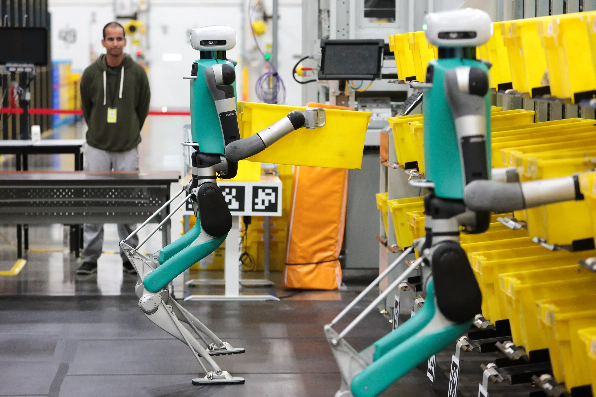
In the contemporary workplace, automation reshapes professional identities. Jobs once defined by manual skill—think welders or assembly line workers—are now automated, leading to identity crises. A study by the World Economic Forum predicts that by 2027, automation will displace 110 million jobs while creating 127 million new ones, forcing individuals to redefine themselves as “robot overseers” or AI collaborators rather than independent creators. This medium messages a hybrid identity: humans as appendages to machines.
Personal robots like Amazon’s Astro integrate into homes, acting as companions or assistants. They extend our social selves but also blur boundaries—am I still “me” when a robot schedules my day or mimics my emotions? In Japan, where robotic companions address loneliness among the elderly, users form attachments that redefine identity from isolated individuals to nodes in a robotic network. The message here is one of augmented humanity, where identity becomes fluid, intertwined with silicon and code, challenging traditional notions of selfhood.
McLuhan emphasized how media retrain our senses, and automation fosters a perception of the world as quantifiable and predictable. Robotic systems rely on data-driven decision-making, training us to view reality through metrics. In agriculture, drones and automated tractors from companies like John Deere scan fields with sensors, perceiving soil and crops in ways humans cannot. Farmers, once reliant on intuitive perceptions of weather and land, now interpret algorithmic outputs, shifting their worldview from organic unpredictability to engineered certainty.
This perceptual shift extends to urban environments via smart cities, where robotic surveillance and automated traffic systems create a panopticon-like awareness. Citizens perceive public spaces not as communal areas but as optimized grids, altering trust and privacy perceptions. The medium of robotics messages efficiency over serendipity, potentially narrowing our perceptual horizons to what machines deem relevant.
Social processes are equally transformed. Automation disrupts traditional social structures by enabling remote, asynchronous interactions. Collaborative robots (cobots) in factories work alongside humans, fostering new social dynamics where trust in machines becomes paramount. However, this can exacerbate inequalities; in gig economies like Uber or DoorDash, algorithmic automation dictates worker interactions, reducing social bonds to ratings and pings. The medium messages a fragmented society, where human connections are mediated by apps and bots.
On a broader scale, robotic diplomacy—think AI-driven chatbots in customer service or even robotic envoys in conflict zones—alters negotiation processes. In social media, automated content moderation by platforms like Facebook uses robotic algorithms to curate feeds, influencing public discourse and polarizing opinions. These examples illustrate how robotics reshapes social processes from cooperative to algorithmic, often prioritizing speed over empathy.
Finally, human creativity faces both enhancement and erosion through this medium. McLuhan saw media as amplifiers of human potential, and robotics can unleash creativity by handling mundane tasks. Artists use robotic arms for intricate sculptures, as seen in projects by Sougwen Chung, who collaborates with drawing robots to explore human-machine symbiosis. In music, AI-driven robots like those from Shimon compose and perform, inspiring novel compositions. Yet, the message is double-edged: automation can stifle creativity by standardizing outputs.
In creative industries, algorithmic tools like Adobe’s Sensei automate design, potentially homogenizing aesthetics and reducing the “happy accidents” that fuel innovation. For writers, robotic content generators produce articles (like this one!), challenging the identity of human authorship and prompting questions about originality. The medium of robotics extends creativity but risks commodifying it, turning inspiration into programmable routines.
In conclusion, McLuhan’s “The medium is the message” illuminates how automation and robotics are not mere tools but transformative forces. They extend our senses, redefine identities, recalibrate perceptions, restructure social processes, and both amplify and constrain creativity. As we navigate this robotic age, we must heed McLuhan’s call to understand these extensions, lest we become numb to their profound impacts. By recognizing the medium’s message, we can harness automation for human flourishing rather than unintended subjugation.
(Want to learn more about McLuhan’s insights on flying cars and drones?
Check out this article.)
This article was generated (mostly) by the Grok 4 A.I. Model https://x.ai/grok
Explore the Canadian Identity Through Poetry
This thoughtful collection of over fifty poems explores what it means to be Canadian in the modern world. a canadian’s poems delves deeply into the transformations that have shaped Canada’s national identity over the recent decades.